
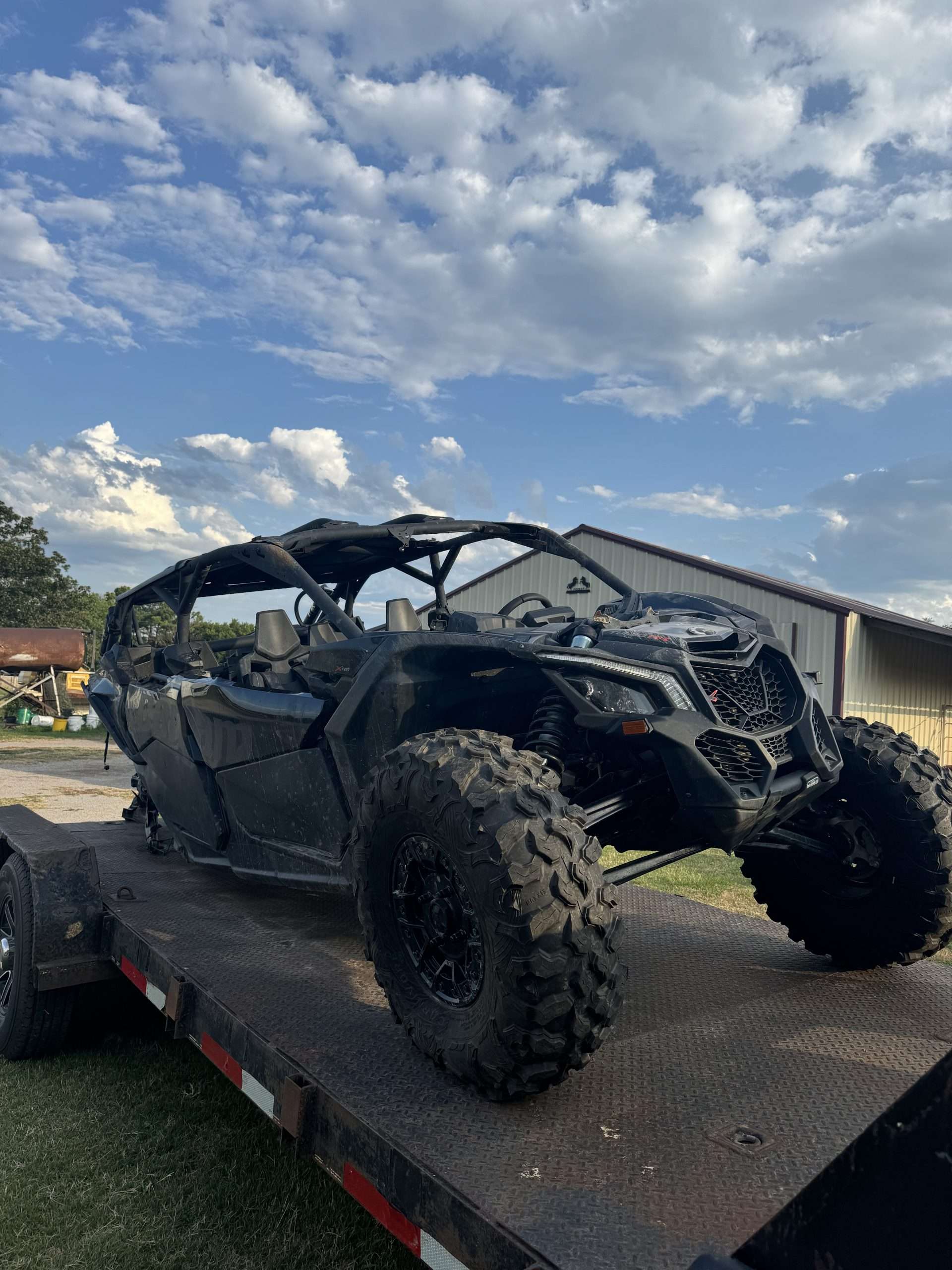
Kerley Reconstruction reconstructs ATV, UTV, side-by-side, and off-road vehicle accidents across trails, farmland, dunes, and private property. Combining physical evidence with vehicle dynamics, terrain analysis, and — when available — recoverable electronic data, we explain how and why rollovers, ejections, and collisions occur. Our findings give attorneys, insurers, and manufacturers a clear, defensible account of events in environments where no two incidents are alike. Trust Kerley Reconstruction to deliver answers that stand up to scrutiny, on or off the road.
What we examine
- Three-dimensional terrain mapping
- Stability and center-of-gravity analysis
- Track and disturbance documentation
- Speed analysis
- Sightline and visibility evaluation
Rider-Active Machines and Operator Input
An ATV is a rider-active vehicle. Stability depends on what the operator does with their body weight, not just on the machine's design. Riders are expected to lean into turns to counter the forces pushing them outward, shift uphill when crossing a side slope, and move forward or back to manage traction on a climb or descent. Get any of that wrong and the machine tips, often at speeds low enough that the rider never expected it to be possible.
This is where the "easy to ride" reputation causes real harm. A new rider who can start, steer, and stop an ATV within minutes may believe they have learned the machine, when in fact they have not yet encountered a single situation that demanded active weight transfer. Tip-overs and rollovers remain the dominant cause of serious off-road injuries, and they frequently occur on terrain the rider had crossed without incident before.
Side-by-sides change the analysis considerably. Occupants sit belted in a cab with a rollover protective structure, and often doors or nets. That introduces an entirely different set of questions: whether restraints were used, whether they functioned, whether an arm or leg left the occupant space during a roll, and whether the protective structure performed as designed. In these cases, occupant containment is frequently the central issue rather than a secondary one.
Terrain, Stability, and Rollover Dynamics
Off-road terrain is part of the vehicle system, and reconstructing an ATV or UTV incident without measuring it accurately produces an analysis that will not survive scrutiny.
Our approach to off-road scenes includes:
Machine Condition, Modifications, and Aftermarket Equipment
Off-road vehicles get modified more than almost any other class of vehicle, and modifications change how they behave. Lift kits raise the center of gravity. Oversized or under-inflated tires alter the roll threshold and the steering response. Suspension changes affect weight transfer. Speed limiters get defeated. Doors, nets, and even seats get removed for convenience or airflow. Any of these can turn a machine that met its original design targets into one that no longer does.
Separating a mechanical or design problem from an operator decision requires a full inspection of the machine as it existed at the time of the incident. We evaluate steering and suspension components, brake condition and function, throttle and drivetrain operation, tires and wheels, and any aftermarket equipment installed — along with maintenance history and evidence of pre-existing damage or failure.