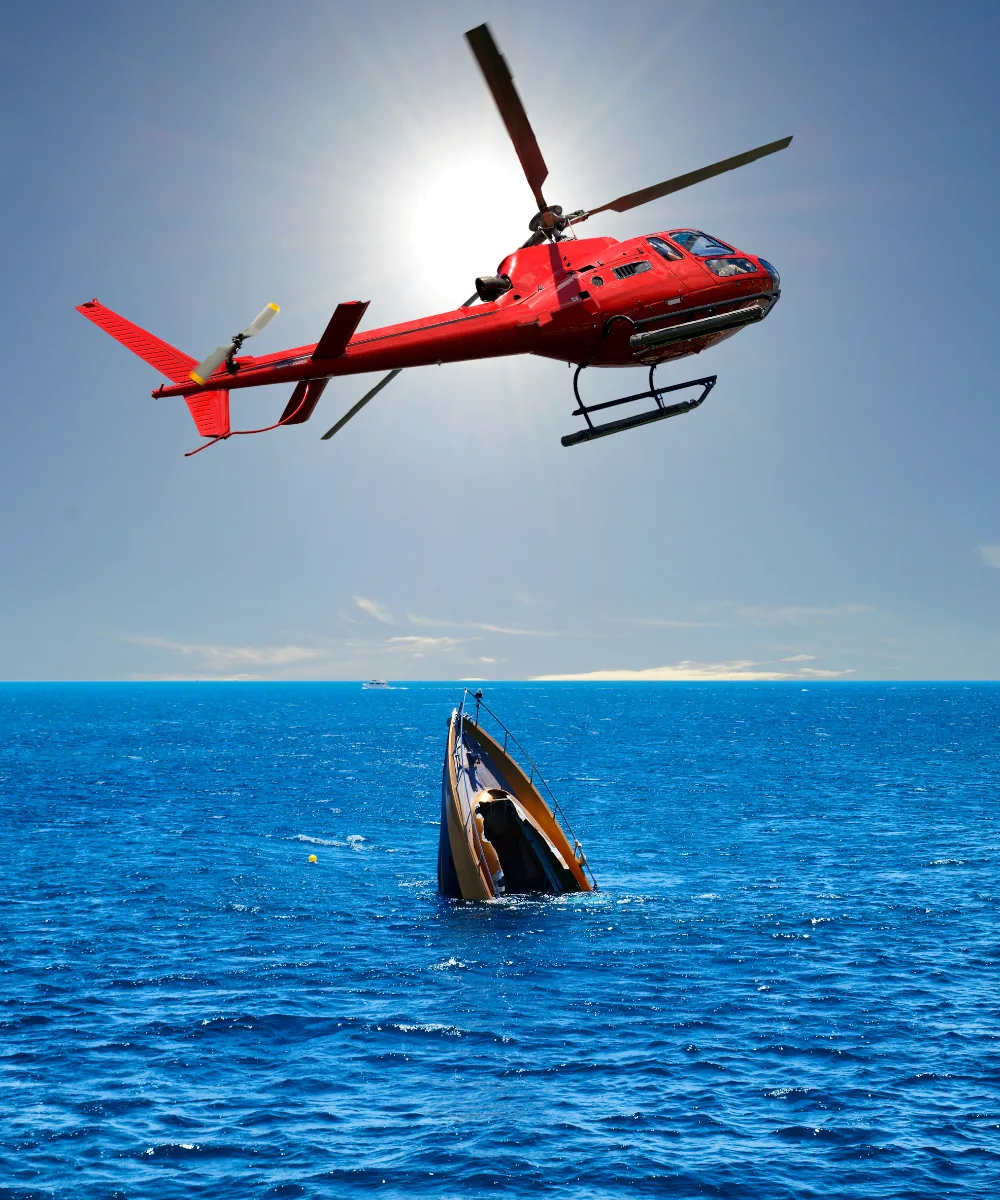
Kerley Reconstruction brings its forensic expertise to the water, reconstructing boating, watercraft, and personal watercraft incidents on lakes, rivers, and coastal waterways. Drawing on physical evidence, vessel damage, witness accounts, and the rules that govern navigation, we determine how a collision, capsizing, or grounding occurred and what contributed to it. Every reconstruction is built to withstand scrutiny, giving attorneys, insurers, and investigators a clear, authoritative account of events on the water. While marine craft rarely store the electronic data found in modern automobiles, our methods are designed to deliver answers with or without it. Trust Kerley Reconstruction to uncover the truth behind every marine incident.
What we examine
- Hull and component damage mapping
- Scene and shoreline documentation
- Environmental reconstruction
- Photographic and video analysis
- Witness vessel and passenger accounts
Why Watercraft Behave Nothing Like Vehicles on the Road
The starting point in any marine case is understanding how the vessel involved actually handles, because the differences between watercraft types are significant enough to change the entire analysis.
A personal watercraft operator sits or stands astride the hull and steers with handlebars, fully exposed and with no structure between them and an impact. The operator of a larger power boat sits at a helm with a wheel and throttle, often behind a windshield or inside a cabin, with passengers distributed across the vessel. Those two situations produce completely different injury patterns, ejection paths, and sightline questions.
Propulsion matters just as much. Jet-driven watercraft steer by aiming a stream of water expelled from the rear of the hull, which means steering authority is tied directly to throttle input — an operator who releases the throttle to avoid something can lose the ability to turn away from it at the same moment. Propeller-driven boats steer with a rudder or an outdrive and retain some directional control when power is reduced. Larger vessels are slower to respond but far more stable; smaller ones are nimble to the point of being unforgiving for an inexperienced operator who misjudges a turn radius or the effect of a wake.
Evidence on the Water
Marine scenes do not hold still. There are no tire marks, no gouges in pavement, no debris field that stays where it landed. Current moves it, wind moves it, and by the time an investigator arrives, the surface of the water looks exactly as it did before the incident. That makes disciplined evidence collection critical, and it makes the vessels themselves the single most important piece of physical evidence in the case.
Our marine investigations typically include:
Electronic Data From Vessels and Onboard Systems
Recreational vessels are increasingly equipped with systems that record useful information, but availability varies enormously by manufacturer, model, and model year. There is no marine equivalent of the standardized automotive event data recorder, and no single tool that reads every vessel.
Depending on what is aboard, potential sources may include engine control modules that retain operating history, GPS chartplotters and fish finders that log track data, handheld navigation devices, and mobile phones or wearables carried by those on board. Some of this data is straightforward to preserve. Some of it is overwritten quickly or lost entirely once a battery is disconnected or a unit is removed from the vessel.
We evaluate each case individually to determine what data may exist, what can realistically be recovered, and how it should be preserved before it is lost. Early involvement makes a substantial difference here, the sooner a vessel is secured and inspected, the more likely it is that whatever record existed is still there.