
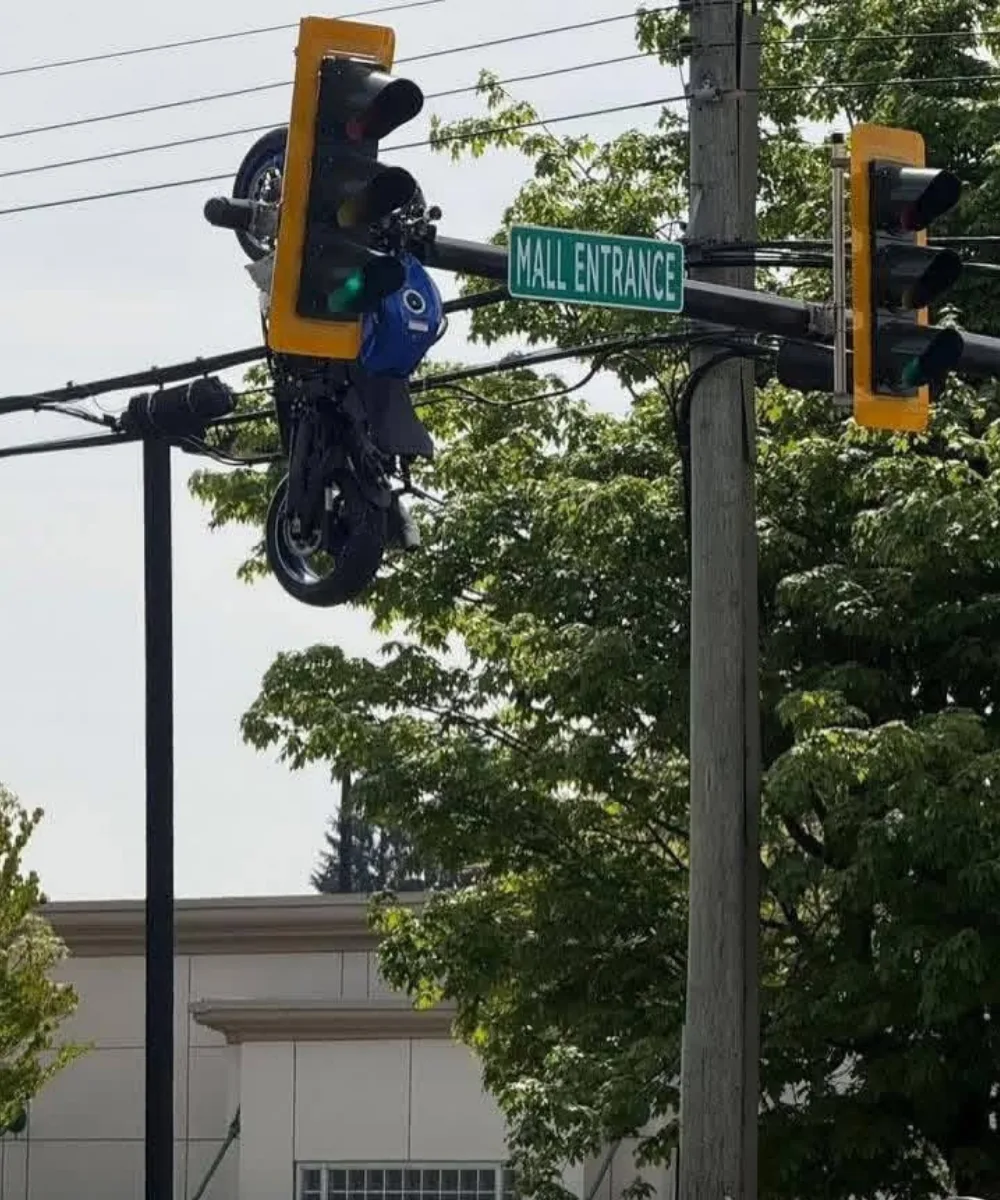
Motorcycle collisions present unique reconstruction challenges — riders are exposed, the vehicles are inherently less stable, and the margin between an avoidable and an unavoidable crash is small. Kerley Reconstruction analyzes rider and vehicle dynamics, roadway evidence, and the actions of every party involved to establish exactly how a motorcycle crash occurred. Where recoverable electronic data exists, we use it to strengthen our findings; where it does not, our physical reconstruction stands on its own. Our work gives attorneys, insurers, and investigators a clear, defensible account of events. Trust Kerley Reconstruction to uncover the truth behind every motorcycle incident.
Motorcycle Collision Reconstruction
We reconstruct single- and multi-vehicle motorcycle crashes using physical evidence, rider kinematics, and the principles that govern two-wheeled dynamics. By analyzing pre-impact braking and lean, separation and throw distances, scrape and gouge marks, and final rest positions, we determine speed, path, and the sequence of events — accounting for how differently a motorcycle behaves from a passenger vehicle.
Electronic Data
A growing number of motorcycles store recoverable electronic information. Depending on the year, make, and model, certain machines — such as some recent Harley-Davidson and Kawasaki models, and Can-Am's three-wheeled Spyder and Ryker — retain data through event data recorders, infotainment systems, or engine control units, including parameters captured in the moments leading up to a crash. Because availability and content vary widely from one motorcycle to the next, we evaluate each vehicle individually to identify, preserve, and analyze whatever electronic evidence may exist.
Conspicuity & Human Factors
Many motorcycle cases turn on what each party could see and do. We evaluate conspicuity, sightlines, lighting, and perception-reaction time alongside speed and rider experience to assess how the collision developed and whether it could have been avoided. This human-factors analysis connects the physical and electronic evidence to a credible explanation of cause — essential for litigation and insurance claims.